Unity游戲開發(fā)導(dǎo)航系統(tǒng)實(shí)戰(zhàn)指南:從入門到精通
一、導(dǎo)航系統(tǒng)基礎(chǔ)概念
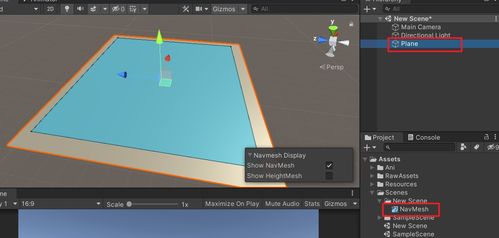
Unity的Navigation System(導(dǎo)航系統(tǒng))是開發(fā)游戲AI尋路功能的核心模塊。它允許開發(fā)者輕松創(chuàng)建能夠智能尋路的角色,無需編寫復(fù)雜的路徑規(guī)劃算法。該系統(tǒng)基于NavMesh(導(dǎo)航網(wǎng)格)技術(shù),將游戲場景的可行走區(qū)域轉(zhuǎn)化為多邊形網(wǎng)格數(shù)據(jù),供AI角色計(jì)算最優(yōu)移動路徑。
核心組件:
1. NavMesh:場景中烘焙生成的導(dǎo)航網(wǎng)格表面
2. NavMeshAgent:附加在游戲?qū)ο笊系膶?dǎo)航代理組件
3. NavMeshObstacle:動態(tài)障礙物組件
4. Off-Mesh Link:連接不同高度區(qū)域的特殊通道
二、NavMesh烘焙流程詳解
2.1 場景準(zhǔn)備
在烘焙前,需要標(biāo)記場景中的靜態(tài)幾何體:
- 為地面和可行走區(qū)域添加“Navigation Static”標(biāo)記
- 設(shè)置障礙物和不可行走區(qū)域
- 調(diào)整場景對象的Scale和Rotation確保正確對齊
2.2 烘焙參數(shù)設(shè)置
打開Window > AI > Navigation面板,關(guān)鍵參數(shù)包括:
- Agent Radius:代理半徑(避免碰撞)
- Agent Height:代理高度(決定可通過空間)
- Max Slope:最大爬坡角度
- Step Height:可跨越臺階高度
- Drop Height:可下落高度
- Jump Distance:可跳躍距離
2.3 分層烘焙技巧
對于復(fù)雜場景,建議使用分層烘焙:`csharp
// 示例:分層烘焙設(shè)置
NavMeshBuildSettings settings = NavMesh.GetSettingsByID(0);
settings.agentRadius = 0.5f;
settings.agentHeight = 2.0f;
NavMeshBuilder.BuildNavMeshData(settings, sources, bounds, position, rotation);`
三、NavMeshAgent組件實(shí)戰(zhàn)應(yīng)用
3.1 基礎(chǔ)移動控制
`csharp
public class PlayerController : MonoBehaviour
{
private NavMeshAgent agent;
private Camera mainCamera;
void Start()
{
agent = GetComponent
mainCamera = Camera.main;
}
void Update()
{
if (Input.GetMouseButtonDown(0))
{
Ray ray = mainCamera.ScreenPointToRay(Input.mousePosition);
RaycastHit hit;
if (Physics.Raycast(ray, out hit))
{
agent.SetDestination(hit.point);
}
}
}
}`
3.2 高級移動控制
`csharp
// 1. 速度與加速度控制
agent.speed = 5f;
agent.acceleration = 8f;
// 2. 旋轉(zhuǎn)設(shè)置
agent.angularSpeed = 360f;
agent.updateRotation = true;
// 3. 停止距離與避讓
agent.stoppingDistance = 1f;
agent.autoBraking = true;
agent.avoidancePriority = 50;
// 4. 路徑狀態(tài)監(jiān)測
if (agent.pathPending) {
Debug.Log("路徑計(jì)算中...");
}
if (agent.remainingDistance <= agent.stoppingDistance) {
Debug.Log("到達(dá)目標(biāo)");
}`
3.3 動態(tài)路徑更新
`csharp
// 實(shí)時(shí)更新目標(biāo)位置
public void UpdateTargetPosition(Vector3 newPosition)
{
if (agent.isActiveAndEnabled)
{
agent.SetDestination(newPosition);
}
}
// 路徑有效性檢查
public bool IsPathValid(Vector3 target)
{
NavMeshPath path = new NavMeshPath();
if (agent.CalculatePath(target, path))
{
return path.status == NavMeshPathStatus.PathComplete;
}
return false;
}`
四、高級導(dǎo)航功能實(shí)現(xiàn)
4.1 動態(tài)障礙物處理
public class DynamicObstacle : MonoBehaviour
{
private NavMeshObstacle obstacle;
void Start()
{
obstacle = gameObject.AddComponent<NavMeshObstacle>();
obstacle.shape = NavMeshObstacleShape.Box;
obstacle.carving = true; // 動態(tài)雕刻N(yùn)avMesh
obstacle.carveOnlyStationary = false;
}
void Update()
{
// 動態(tài)更新障礙物位置
obstacle.transform.position = CalculateNewPosition();
}
}
4.2 區(qū)域成本與優(yōu)先級
// 設(shè)置不同區(qū)域成本
public class AreaCostManager : MonoBehaviour
{
void Start()
{
// 道路成本低,草地成本高,水域不可通過
NavMesh.SetAreaCost(3, 1.0f); // 道路
NavMesh.SetAreaCost(4, 2.0f); // 草地
NavMesh.SetAreaCost(5, 100f); // 水域(實(shí)際不可通過)
}
}
4.3 Off-Mesh Link實(shí)現(xiàn)
// 創(chuàng)建連接不同高度的橋梁
public class CustomOffMeshLink : MonoBehaviour
{
public Transform startPoint;
public Transform endPoint;
void Start()
{
OffMeshLink link = gameObject.AddComponent<OffMeshLink>();
link.startTransform = startPoint;
link.endTransform = endPoint;
link.biDirectional = true;
link.activated = true;
link.costOverride = 2.0f; // 額外成本
}
}
五、性能優(yōu)化技巧
5.1 導(dǎo)航數(shù)據(jù)優(yōu)化
- 合理設(shè)置烘焙精度:平衡精度與性能
- 使用代理半徑緩存:避免頻繁計(jì)算
- 分區(qū)域烘焙:大型場景分塊處理
5.2 運(yùn)行時(shí)優(yōu)化
public class OptimizedNavigation : MonoBehaviour
{
private NavMeshAgent agent;
private float updateInterval = 0.5f;
private float timer;
void Update()
{
timer += Time.deltaTime;
if (timer >= updateInterval)
{
UpdateNavigation();
timer = 0f;
}
}
void UpdateNavigation()
{
// 降低更新頻率的導(dǎo)航邏輯
if (ShouldUpdatePath())
{
agent.SetDestination(CalculateTarget());
}
}
}
六、常見問題與解決方案
6.1 導(dǎo)航問題排查
- 代理卡住:檢查碰撞體設(shè)置和Agent尺寸
- 路徑計(jì)算失敗:確認(rèn)目標(biāo)點(diǎn)在NavMesh上
- 性能下降:減少同時(shí)活動的Agent數(shù)量
6.2 調(diào)試工具使用
// 可視化調(diào)試
void OnDrawGizmos()
{
if (agent != null && agent.hasPath)
{
Gizmos.color = Color.red;
for (int i = 0; i < agent.path.corners.Length - 1; i++)
{
Gizmos.DrawLine(agent.path.corners[i], agent.path.corners[i + 1]);
}
}
}
七、實(shí)戰(zhàn)項(xiàng)目:創(chuàng)建智能巡邏AI
public class PatrolAI : MonoBehaviour
{
public Transform[] patrolPoints;
private NavMeshAgent agent;
private int currentPointIndex = 0;
private float waitTime = 2f;
private float waitTimer;
private bool isWaiting = false;
void Start()
{
agent = GetComponent<NavMeshAgent>();
MoveToNextPoint();
}
void Update()
{
if (!agent.pathPending && agent.remainingDistance < 0.5f)
{
if (!isWaiting)
{
StartWaiting();
}
else
{
waitTimer += Time.deltaTime;
if (waitTimer >= waitTime)
{
MoveToNextPoint();
}
}
}
}
void MoveToNextPoint()
{
isWaiting = false;
waitTimer = 0f;
if (patrolPoints.Length == 0) return;
agent.SetDestination(patrolPoints[currentPointIndex].position);
currentPointIndex = (currentPointIndex + 1) % patrolPoints.Length;
}
void StartWaiting()
{
isWaiting = true;
// 可在此處添加觀察、警戒等行為
}
}
八、與進(jìn)階方向
Unity導(dǎo)航系統(tǒng)為游戲AI開發(fā)提供了強(qiáng)大的基礎(chǔ)工具。掌握NavMesh烘焙、Agent控制、動態(tài)障礙物處理等核心技術(shù)后,開發(fā)者可以:
- 擴(kuò)展應(yīng)用:結(jié)合行為樹、狀態(tài)機(jī)創(chuàng)建更智能的AI
- 多Agent協(xié)調(diào):實(shí)現(xiàn)群體移動和避讓
- 動態(tài)環(huán)境適應(yīng):實(shí)時(shí)響應(yīng)場景變化
- 自定義路徑規(guī)劃:擴(kuò)展Unity原生導(dǎo)航功能
通過不斷實(shí)踐和優(yōu)化,你將能夠創(chuàng)建出既智能又高效的游戲?qū)Ш较到y(tǒng),為玩家?guī)砀映两降挠螒蝮w驗(yàn)。
提示:實(shí)際開發(fā)中請根據(jù)具體游戲需求調(diào)整參數(shù)和實(shí)現(xiàn)方式,建議在移動平臺特別注意導(dǎo)航計(jì)算的性能消耗。